A cat that skips a meal now and then is usually nothing to worry about. A cat that refuses food for a full day is different, because cats tolerate fasting poorly and a genuine loss of appetite often points to a cause worth finding.
This guide walks through the common reasons cats stop eating, what you can safely try at home, and the point at which a skipped meal becomes a vet visit.
How Long Can a Cat Go Without Eating?
Most healthy adult cats can miss a single meal without any real risk. Going a full 24 hours with little or no food is the line most veterinarians use for calling the clinic, and waiting longer than 48 hours is not recommended.
The reason cats get their own rule is a condition called hepatic lipidosis, sometimes called fatty liver disease. When a cat stops eating, the body mobilizes fat for energy faster than the liver can process it, and fat begins to build up inside liver cells. Overweight cats are actually the most vulnerable to this, because they have more fat to mobilize. Kittens, seniors, and cats with existing illness have even less margin, so treat any skipped day in those cats as more urgent.
Common Reasons a Cat Stops Eating
Appetite is a symptom, not a diagnosis. The causes below run from harmless to serious, which is why the context around the skipped meal matters as much as the skipped meal itself.
Food and Bowl Problems
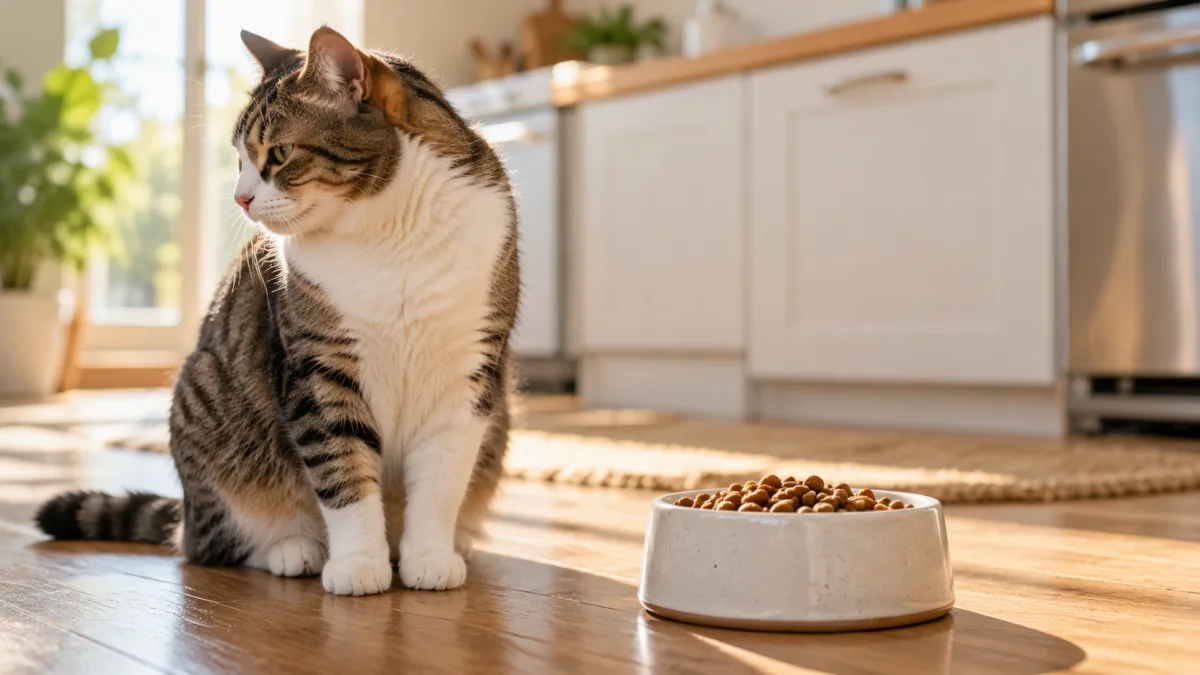
The simplest explanations live in the kitchen. Food that has been open too long smells stale to a nose far more sensitive than yours. A bowl washed with strong-smelling detergent, pushed against a wall, or set beside the litter tray can also put a cat off. Some cats dislike deep bowls that bend their whiskers, a complaint sometimes called whisker fatigue.
Stress and Household Changes
Cats are routine animals, and a new pet, a new baby, visitors, renovation noise, or a moved food station can suppress appetite for a day or two. A cat that eats less during upheaval but still drinks, plays, and behaves normally is usually showing stress, not illness.
Dental Pain and Nausea
A cat that wants to eat but walks away from the bowl, drops food, or chews on one side may have dental disease or mouth pain rather than a missing appetite. Nausea from hairballs, a new medication, or an upset stomach produces a similar pattern: interest in food, then refusal.
Underlying Illness
Kidney disease, thyroid problems, infections, digestive blockages, and pain anywhere in the body commonly announce themselves through reduced appetite. This is why a cat that truly will not eat, especially one showing any other change in behavior, deserves a veterinary exam instead of home experiments.
What to Try at Home First
If your cat skipped a meal or two but still acts normal, a few low-risk adjustments often restart the appetite:
- Offer a different food. A strongly aromatic wet food, gently warmed for ten or fifteen seconds, smells much more appealing than cold food straight from the refrigerator.
- Change the bowl or the location. A wide, shallow dish in a quiet corner away from the litter tray removes several common objections at once.
- Serve smaller, fresher portions. Wet food left out for an hour loses its appeal; put down a tablespoon at a time and pick up what is ignored.
- Hand-feed a small amount. Some cats will take food offered on a fingertip or a spoon when the bowl itself has become the problem.
- Keep water easy to reach. Dehydration worsens appetite, so refresh the bowl and consider a second water station in another room.
Give these adjustments a day, not a week. If nothing works, the food was probably never the issue.
Signs That Mean "Call the Vet Now"
Appetite loss on its own is a wait-one-day problem. Appetite loss combined with any of the following is a same-day problem:
- Vomiting more than once, or vomiting combined with refusing food
- Complete refusal of water as well as food
- Lethargy, hiding, or unusual stillness
- Straining in the litter box or producing nothing
- Visible weight loss, drooling, or pawing at the mouth
- Any refusal in a kitten, a senior cat, or a cat with a known condition like diabetes or kidney disease
Trust the pattern. A cat that normally raids the bowl at feeding time and now ignores it entirely is telling you something changed, and vets hear this story every day.
Frequently Asked Questions
My cat is drinking but not eating. Is that serious?
Drinking is a good sign, but a cat that still refuses food a full day later needs a vet call even if water intake looks normal. Some serious illnesses leave thirst untouched while removing appetite.
Can stress alone make a cat stop eating?
Yes. Moves, new pets, visitors, and loud work on the home can suppress appetite for a day or two. Stress-related refusal still comes with an otherwise normal cat; a cat that is also hiding or lethargic points elsewhere.
Should I switch foods if my cat refuses to eat?
Offering a different food is a reasonable first test, but switch gradually once appetite returns. Abrupt food changes cause stomach upset, which makes the original problem look worse.
How do I tempt a picky cat to eat?
Warm wet food slightly, serve it fresh in a shallow dish, and try a quiet location. A small amount of plain cooked chicken can restart interest. These tricks work for pickiness, not for illness.
When Appetite Returns, Keep It Simple
Once your cat starts eating again, go back to a steady routine: measured meals at predictable times, a clean bowl in a calm spot, and a food your cat reliably finishes. Consistency makes the next appetite dip easy to spot early, when it is still cheap to fix.
For building a steady routine, see How Often Should You Feed a Cat, estimate portions with the Cat Food Calculator, and browse the wider daily routine in Basic Cat Care.