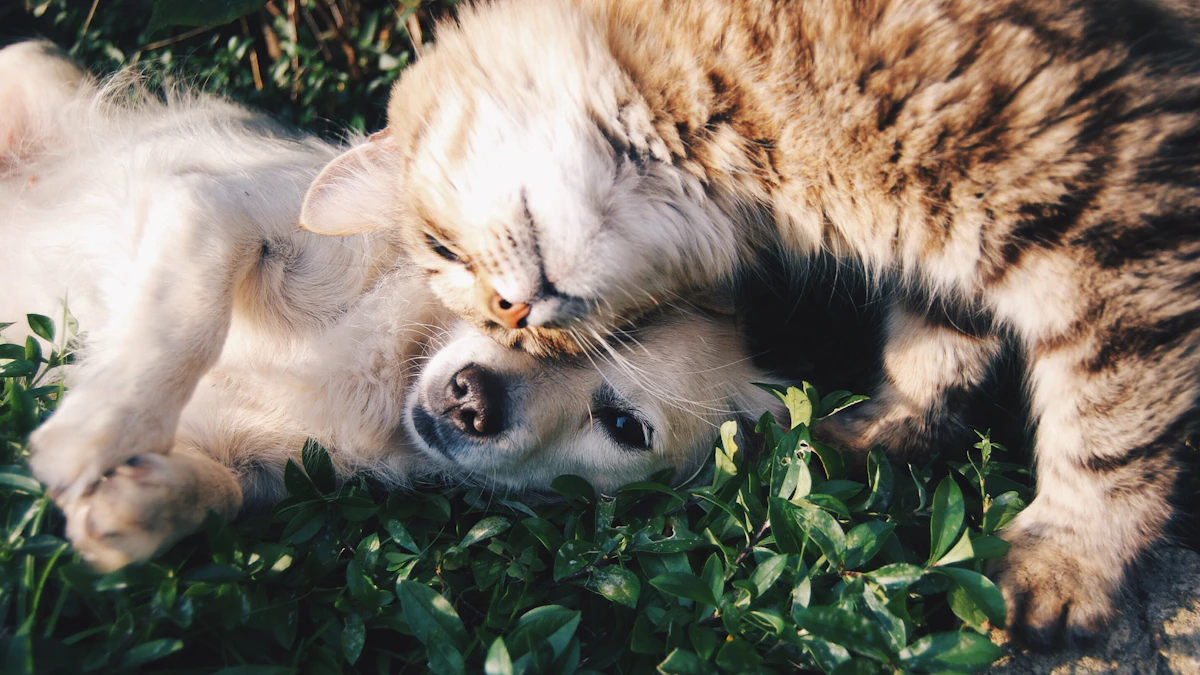

Cats and dogs can share a home peacefully, sometimes even becoming close companions, but the first two weeks decide almost everything. A rushed first meeting can create fear or aggression that takes months to undo.
The safe method is slow and staged: scent first, then sight through a barrier, then supervised time in the same room, then freedom. This guide walks through each stage and how to read the signals that say it is safe to move forward.
Before the Introduction
Set up the cat's own territory before the dog ever enters the picture. The cat needs a room or zone the dog cannot access, with food, water, litter box, and vertical escape routes like a cat tree or a clear shelf. In every stage that follows, the cat decides when to approach and always has a way up or out. A cat with a guaranteed retreat stays curious; a cornered cat fights.
It also helps to tire the dog out before early meetings. A dog that has just been walked or played with is calmer and less likely to lunge or fixate. High-prey-drive dogs need extra caution: a dog that fixates on squirrels on every walk may need professional help before living safely with a cat.
Stage One: Scent Swapping
Animals meet through smell before they meet through sight. For two or three days, keep the animals fully separated and trade their scents: rub a cloth on the cat's cheeks and leave it near the dog's bed, and do the same in reverse. Swap a blanket between them. Feed each animal on opposite sides of the same closed door, so the other animal's scent starts predicting something good: dinner.
You are looking for indifference. When the dog sniffs the cat-scented cloth and walks away, and the cat eats normally beside the door that smells like dog, the first stage is done.
Stage Two: Sight Through a Barrier
Next, let them see each other without contact. A baby gate, a cracked door, or the dog on a leash on one side of a barrier all work. Keep sessions short, a few minutes, several times a day. Reward calm behavior on both sides with treats and quiet praise.
Read the dog for fixation: a hard stare, stiff body, whining, and lunging mean the dog is not ready for less distance. Read the cat for fear: flattened ears, puffed tail, growling, or hiding mean slow down. A cat that watches the dog for a moment then goes back to eating is exactly what progress looks like.
Stage Three: Supervised Same-Room Time
When barrier meetings are boring for both animals, allow them in the same room with the dog on a leash. Keep the dog's attention on you with treats and simple commands, while the cat is free to observe from a perch or leave entirely. End every session before anyone gets tense; three good minutes beat thirty tense ones.
Gradually lengthen sessions over days until the dog ignores the cat and the cat moves around the room normally. Then repeat with the dog dragging a leash before trusting it off-leash in the same space.
Stage Four: Unsupervised Time
Only after weeks of calm supervised time should the animals share space alone, and even then, keep the cat's safe zone intact forever. The litter box and the cat's food station should always live somewhere the dog cannot reach, because dogs raid both, and guarding them creates needless conflict.
Expect a settling-in period of a month or more before the two are genuinely relaxed. Friendly sniffing and shared naps come later for some pairs and never for others. Peaceful coexistence, where each ignores the other, is a completely successful outcome.
Warning Signs to Watch For
- Dog fixating, staring, or trembling with excitement at the cat's scent or door
- Cat avoiding food or staying away from the litter box because the dog patrols that area
- Any chase, snap, or swat that draws blood, however minor
- Cat hiding continuously for more than a few days after meetings begin
A single bad incident can reset the process by weeks, so when in doubt, go back a stage. If the dog shows true prey drive, an animal behaviorist is a better investment than hoping it fades.
Frequently Asked Questions
How long does it take to introduce a cat and dog?
From a few days for two calm adult animals to several months for a fearful cat or an excitable dog. The most common mistake is compressing the timeline; the stages exist to be taken slowly.
What if my cat keeps hissing at the dog?
Hissing is communication, not failure. It means "keep distance" and is healthy self-advocacy. Let the cat hiss from its safe spot; what you want is the hissing fading as meetings repeat, not suppressing it.
Should the dog be on a leash for first meetings?
Yes, or behind a barrier. The dog must never be free to lunge or chase in early stages. Control the dog's movement; let the cat control the distance.
Will an older cat ever accept a puppy?
Usually, with patience and territory protection. Puppies are relentlessly social, which annoys adult cats, so manage the puppy's access rather than the cat's. Most older cats accept the puppy once the puppy learns to leave them alone.
Slow Is Fast
The paradox of cat-dog introductions is that the owners who rush take longest to get there. A staged introduction that respects the cat's need for escape routes and the dog's need for calm repetition produces a peaceful household far sooner than a sink-or-swim meeting ever does.
For helping a cat settle into a new environment generally, see How to Help a Cat Adjust to a New Home, and if your cat hides when stressed, Why Is My Cat Hiding? explains the signals. More on this topic lives in Socialization & Adjustment.