The carrier comes out of the closet, the cat vanishes under the bed, and the next twenty minutes become a wrestling match nobody wins. This scene is so common that many owners delay vet visits just to avoid it.
The problem is not your cat's stubbornness. Most cats only ever see the carrier minutes before a stressful trip, so the carrier itself becomes a warning sign. Retraining that association takes days, not hours, but it works.
Why Cats Hate the Carrier
Cats learn by association, and most carriers predict exactly two things: confinement and the vet. The cat is not afraid of a plastic box; it is afraid of what the plastic box has always meant. Add in the sensation of being trapped with no exit, and panic is a reasonable response.
The fix is to break that link. The carrier needs to become ordinary furniture that occasionally contains treats and naps, so the rare trip to the vet stops being the only memory attached to it.
Step One: Make the Carrier Furniture
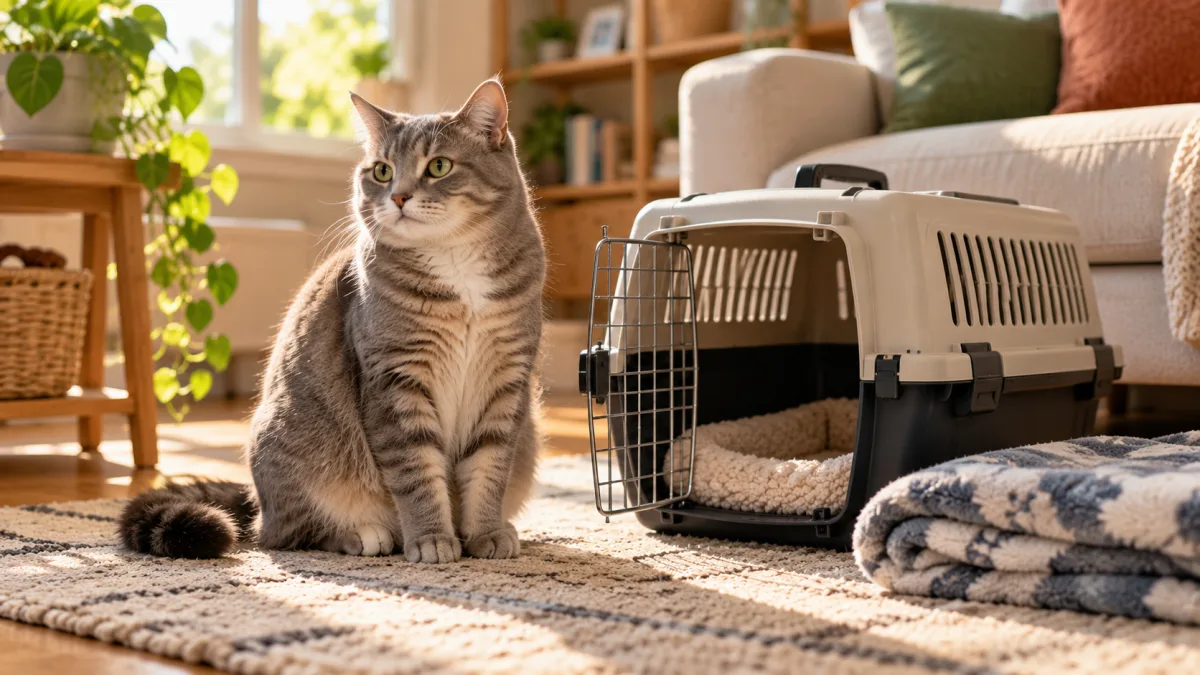
Leave the carrier out permanently, or at least for a week before any planned trip. Put it in a room where your cat already spends time, take the door off or prop it open, and make the inside inviting: a soft blanket that smells like home, and a few treats or a favorite toy tossed inside.
Most cats will investigate on their own schedule. When your cat walks in voluntarily, say nothing dramatic. Calmly drop another treat near the opening. The goal is a cat that naps in the carrier out of boredom, which can take anywhere from a day to a couple of weeks depending on how bad the existing association is.
Step Two: Feed Inside the Carrier
Once your cat enters the carrier without panic, start serving meals inside it. Put the bowl just inside the door at first, then slide it to the back over several days. Eating is incompatible with fear, so a cat calmly finishing dinner in a carrier is rewriting the association faster than any treat session.
When your cat eats inside comfortably, practice brief door closures: close the door during a meal, open it the moment the meal ends. Gradually extend the closed time from seconds to a few minutes. If the cat panics, you moved too fast; back up a step and go slower.
Step Three: Practice Short Trips
Before the real appointment, take practice runs that go nowhere. Carry the closed carrier to the next room, set it down, open it, and offer a treat. Then graduate to sitting in the car for five minutes with the engine off, then a drive around the block, then a drive that ends back home with dinner.
Each boring trip dilutes the memory of terrible ones. A cat that has taken ten car rides ending in nothing bad arrives at the eleventh, the actual vet visit, in a very different state of mind.
If You Have to Load the Cat Today
Sometimes the appointment is this afternoon and there is no time for retraining. The towel method works better than chasing: wrap the cat snugly in a large towel with the head exposed, lift the bundle gently, and lower it into the carrier backward or feet-first depending on the carrier style. Top-loading carriers make this dramatically easier.
Cover the carrier with a light blanket once the cat is inside, because a covered carrier reduces visual stimulation and calms most cats. And next time, order of operations matters: the retraining should happen in the quiet weeks between vet visits, not the morning of one.
Making Vet Visits Easier Overall
A few extras smooth the whole experience. A pheromone spray on the carrier bedding fifteen minutes before departure takes the edge off for many cats. Non-slip bedding inside keeps the cat from sliding on turns. Keep the carrier level when you carry it, and set it on the car seat with a belt through the handle rather than letting it slide on the seat.
At the clinic, keep the carrier covered and elevated off the floor if possible, away from dogs in the waiting room. The Vet Visit & Vaccine Schedule Planner can help you see which visits are coming up so practice trips can start weeks ahead.
Frequently Asked Questions
How long does carrier training take?
Anywhere from a few days for a cat with no bad history to a few weeks for a cat that already dreads the carrier. Daily short sessions beat occasional long ones, and progress at the cat's pace is faster than pushing.
Is a hard or soft carrier better?
Hard carriers with a top opening or a removable top are easiest to load and safest in the car. Soft carriers are lighter to carry but easier for a panicking cat to push out of. For vet visits, a sturdy top-loading hard carrier wins.
Should I sedate my cat for travel?
Only under veterinary direction. Over-the-counter sedatives can be dangerous for cats, and most cats do well with training, pheromone spray, and a covered carrier instead. If your cat is truly frantic, ask your vet about options.
My cat cries the whole car ride. What helps?
Covering the carrier, securing it so it cannot slide, and keeping the car quiet and cool help most cats. Many cats settle after the first ten or fifteen minutes. Practice trips that end at home teach the cat that the car does not always mean the vet.
The Carrier Is Just a Box Again
Cat carrier training is really un-training: removing the fear attached to an object, one calm meal and one boring car ride at a time. Start before you need it, keep sessions short, and the next vet visit stops being a battle.
For settling a cat into new spaces generally, see How to Prepare Your Home for a New Cat, gather supplies with the New Cat Checklist, and browse Basic Cat Care for the everyday routine.