Extra weight is the most common health problem in pet cats, and it sneaks up slowly: a few grams a week until one day the cat that used to leap onto the counter hesitates before the jump.
Feline weight loss is not about putting a cat on a crash diet. Cats need slow, measured reductions, because dropping weight too fast can cause serious liver problems. This guide covers how to tell whether your cat needs to lose weight, how much to feed, and how to keep the process safe.
How to Tell If Your Cat Is Overweight
Scales tell part of the story, but body condition matters more than a number, because a muscular 12-pound cat and a sedentary 12-pound cat are not the same cat.
Run your hands along your cat's sides. On a cat at a healthy weight you can feel the ribs easily under a thin layer of fat, like feeling the back of your hand. If you have to press to find ribs, there is extra padding. Then look from above: a healthy cat has a visible waist behind the ribs, and from the side the belly tucks up rather than hanging low. A swinging belly pouch, a rounded face, and no waist at all suggest it is time for a plan.
Veterinarians score this on a 9-point body condition scale, where 4 to 5 is ideal and 8 to 9 is obese. Your vet can score your cat at a routine visit, and our Cat Weight & Body Condition Check gives you a rough starting estimate at home.
Set a Safe Pace
Fast weight loss is dangerous for cats. When a cat's calorie intake drops too sharply, the body floods the liver with fat for energy, which can trigger hepatic lipidosis, a potentially fatal liver condition. The overweight cats you most want to slim down are the ones most at risk.
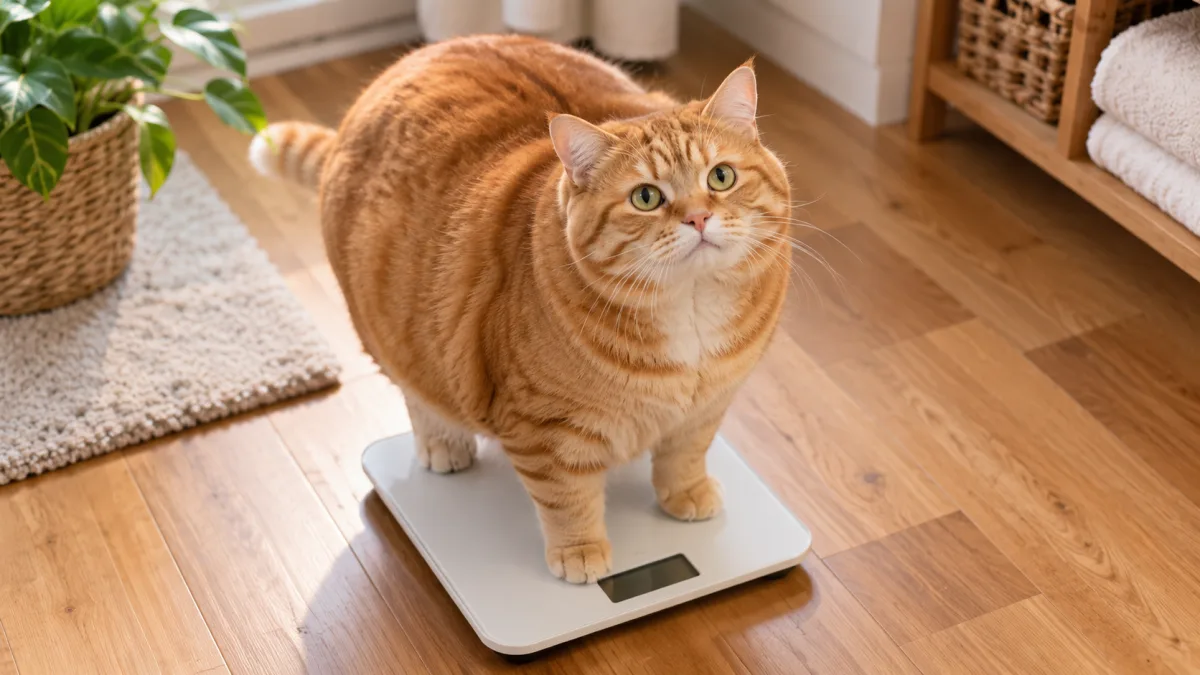
A safe target is about 1 percent of body weight per week, which works out to roughly half a pound a month for a typical cat. At that pace a cat needing to lose three pounds is looking at a six-month project, not a six-week one. Weigh your cat on the same scale every week or two, and slow down or talk to your vet if the drop runs much faster than the target.
Feed Less, Not a Lot Less
The usual starting point is feeding about 80 percent of the calories your cat currently needs to maintain weight, then adjusting from real weigh-ins. Do not simply cut the bowl in half; that overshoots and creates the very liver risk you are avoiding.
Use the Cat Food Calculator to estimate a daily calorie target from your cat's weight and body condition, then measure every meal with a scale or a marked scoop. Eyeballing portions is how most cats got heavy in the first place.
Pick Food That Helps
Wet food usually beats dry for weight loss because it delivers fewer calories per gram and keeps cats feeling full on water content. Whatever the food type, a diet higher in protein and lower in carbohydrates preserves muscle while fat comes off. Your vet can recommend a weight-management formula if ordinary food is not producing results.
Count the Extras
Treats, table scraps, and the second breakfast a cat charms out of another family member all count. Treats should stay under about 10 percent of daily calories, and that includes the treats used for training and medication. If several people feed the cat, agree on one measured daily ration and divide it yourselves.
Move More, Gently
Exercise alone rarely slims a cat, but it protects muscle during weight loss and makes the reduced food easier to bear. Two ten-minute play sessions a day is a realistic start for most households.
Choose play that mimics hunting: a wand toy the cat can chase and pounce on beats a laser pointer that never lands in the paws. Food puzzles and treat balls stretch a small meal into an activity, which helps cats that eat out of boredom. For more ideas, see How to Keep an Indoor Cat Active.
Handle the Begging
A dieting cat will lobby hard for more food, and giving in "just once" teaches the cat that lobbying works. Split the daily ration into three or four smaller meals so the gaps stay short, feed the last meal right before your bedtime to reduce 4 a.m. demands, and answer food-crying with play or attention instead of the bowl.
If begging turns frantic or the cat seems genuinely unwell, check with your vet. Sometimes the diet is too aggressive, and sometimes the appetite spike points at a thyroid problem rather than hunger.
Frequently Asked Questions
How much should an overweight cat eat per day?
There is no universal number, because it depends on current weight, target weight, and the food's calorie density. Estimate a daily target with the Cat Food Calculator, feed about 80 percent of maintenance calories, and confirm the pace with weekly weigh-ins.
Is my cat fat or is it a primordial pouch?
Many cats have a loose flap of skin on the lower belly called a primordial pouch, which is normal anatomy. The difference: a pouch is loose and swings when the cat walks, while fat makes the whole belly firm and round and comes with padded ribs and no waist.
Can I just switch my cat to diet food?
A weight-management food helps, but portions still decide the outcome. Cats can and do gain weight on diet food when the serving is too large. Pair the right food with measured amounts.
How fast should a cat lose weight?
About 1 percent of body weight per week is the widely used safe pace. Faster loss raises the risk of hepatic lipidosis, so a bigger cat does not mean a faster diet.
Slow, Measured, and Boring Wins
Feline weight loss is a marathon of small, consistent meals and regular weigh-ins, not a dramatic intervention. Set a calorie target, feed it on a schedule, add a little play, and let the scale confirm the trend month by month.
For portion planning, see How Often Should You Feed a Cat and the Feeding & Nutrition topic. If your cat refuses the reduced food entirely for more than a day, call your vet rather than pushing through.