A cat that suddenly pees on the rug, the bed, or beside the litter box is not being spiteful. Cats avoid their box for concrete reasons, and the fix starts with figuring out which reason applies to yours.
This guide covers how to rule out a medical problem first, then work through the litter box setup, location, and stress factors that most often send a cat looking for somewhere else to go.
Rule Out a Medical Problem First
Before you rearrange anything, consider the possibility that peeing outside the box hurts or is urgent rather than chosen. Urinary tract infections, bladder inflammation, crystals, and kidney disease all produce cats that urinate in unusual places, often in small amounts with visible straining or frequent trips to the box.
Watch for the warning signs: crying in the box, licking the genital area more than usual, blood-tinged urine, or many small puddles instead of one normal one. Any of these means the litter box is not the problem, and no amount of retraining will help until a vet treats the underlying issue.
Check the Litter Box Itself
When illness is ruled out, the box becomes the first suspect. Cats are clean animals with a strong sense of smell, and their standards for a toilet are stricter than most owners expect.
Cleanliness
A box that smells fine to you may still smell used to your cat. Scoop at least once a day, and wash the box with mild soap every week or two. Heavily scented cleaners and air fresheners near the box can backfire, because a chemical smell layered on top of a litter smell reads as "dirty" to a cat.
Enough Boxes in Enough Places
The standard guideline is one litter box per cat, plus one extra, spread across different locations rather than lined up in a row. In a multi-story home, keep a box on every floor the cat uses. A single box in the basement is an easy answer to "why did my cat pee upstairs."
Box Size, Style, and Litter Depth
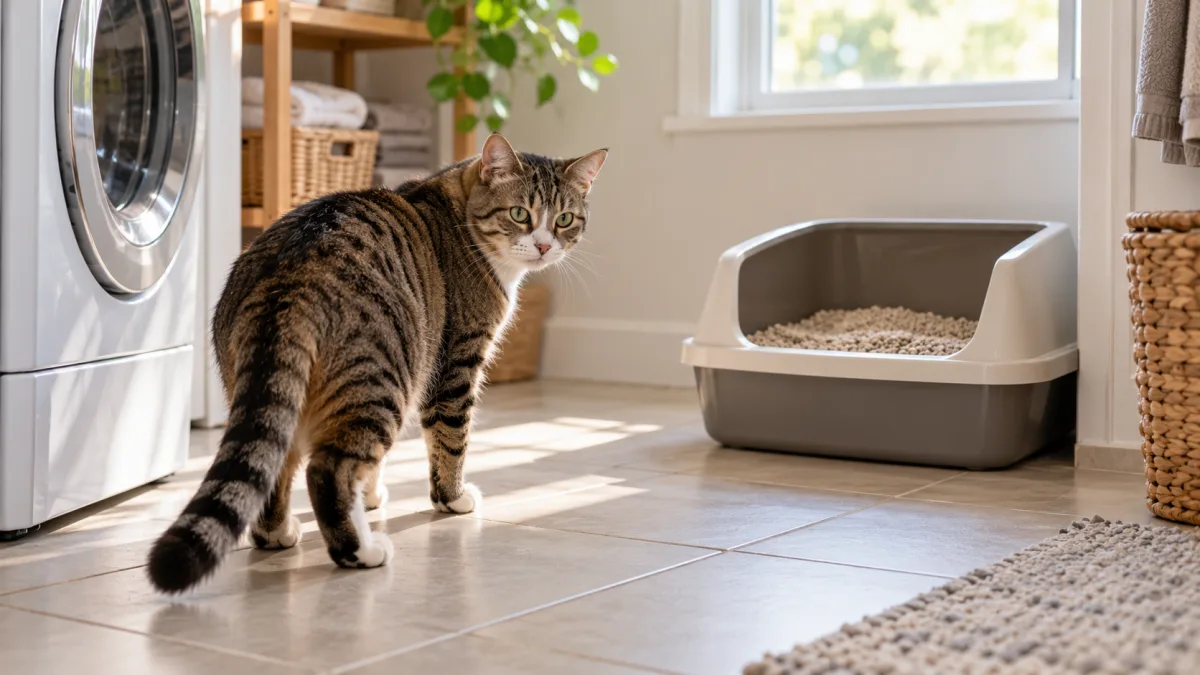
Covered boxes trap odor, and small boxes force large cats into awkward positions. Many cats prefer an open box roughly one and a half times their body length. As for litter, most cats like a soft, unscented, clumping litter about two inches deep. A sudden switch to a new litter type is a classic trigger for box avoidance.
Location
Litter boxes belong in quiet, low-traffic spots where the cat can see an exit. A box beside a rattling washing machine, in a hallway everyone walks through, or in a dead-end corner where another pet can ambush the cat all fail the same test: the cat does not feel safe there.
Consider Stress and Territory
Sometimes the box is fine and the cat's world is the problem. A new pet, a new baby, moved furniture, outdoor cats visible through the window, or tension between household cats can all trigger out-of-box urination. Peeing on vertical surfaces like walls or furniture sides is usually marking, which is driven by stress and territory rather than a dirty box.
Neutered cats mark less than intact ones, but any cat under enough pressure may start. If the accidents cluster around windows, doors, or the belongings of a new household member, stress is the lead suspect.
Clean Accident Spots Properly
Ordinary household cleaners remove the stain but not the smell that matters. Cat urine contains compounds only enzymatic cleaners break down fully, and a spot that still smells like a toilet to your cat invites a repeat visit.
Soak the area with an enzymatic cleaner and let it work for the full time on the label. Avoid ammonia-based products, which smell vaguely like urine to a cat. Once the spot is clean, make it unappealing: feed the cat there, put a food bowl or a scratcher on it, or block access for a few weeks.
Rebuilding the Habit
Punishing a cat for accidents does not work. The cat cannot connect the scolding to the act, and the added stress makes the problem worse. Instead, reward box use calmly, keep the box spotless, and remove the reasons to go elsewhere.
- Confirm health with a vet if the problem is new, sudden, or comes with straining or small puddles.
- Add boxes until you have one per cat plus one, in separate, quiet locations.
- Scoop daily and wash boxes regularly with unscented soap.
- Clean every accident site with an enzymatic cleaner.
- Reduce stressors where you can, and give an anxious cat more vertical space and private territory.
Most cases resolve once the right cause is found. The ones that do not usually trace back to a medical issue that has not been diagnosed yet.
Frequently Asked Questions
Why does my cat pee on soft things like beds and laundry?
Soft surfaces absorb urine well and carry your scent strongly, which comforts an anxious cat. Medical problems and stress are the usual drivers, so start with a vet check, then secure laundry and limit bedroom access while you work on the cause.
Is my cat peeing outside the box to punish me?
No. Cats do not connect elimination to revenge. What looks like spite is almost always pain, a dirty or unsafe box, or stress from a change you may not have noticed.
How many litter boxes do I need for two cats?
Three. The general rule is one box per cat plus one extra, placed in different spots. Two cats guarding a single box in one location is a common cause of accidents.
Will a covered litter box fix the problem?
Usually the opposite. Covers trap odor and make some cats feel trapped. If your cat is already avoiding the box, an open, larger, well-placed box is the safer experiment.
A Problem With a Findable Cause
Peeing outside the box feels like a behavioral mystery, but it nearly always has a concrete cause: health, hygiene, location, or stress. Work through the causes in order rather than guessing, and most cats return to the box once their actual objection is removed.
For choosing a litter your cat will accept, see How to Choose the Right Cat Litter, size the fill with the Cat Litter Calculator, and browse more setup tips in Litter & Toilet Habits.