
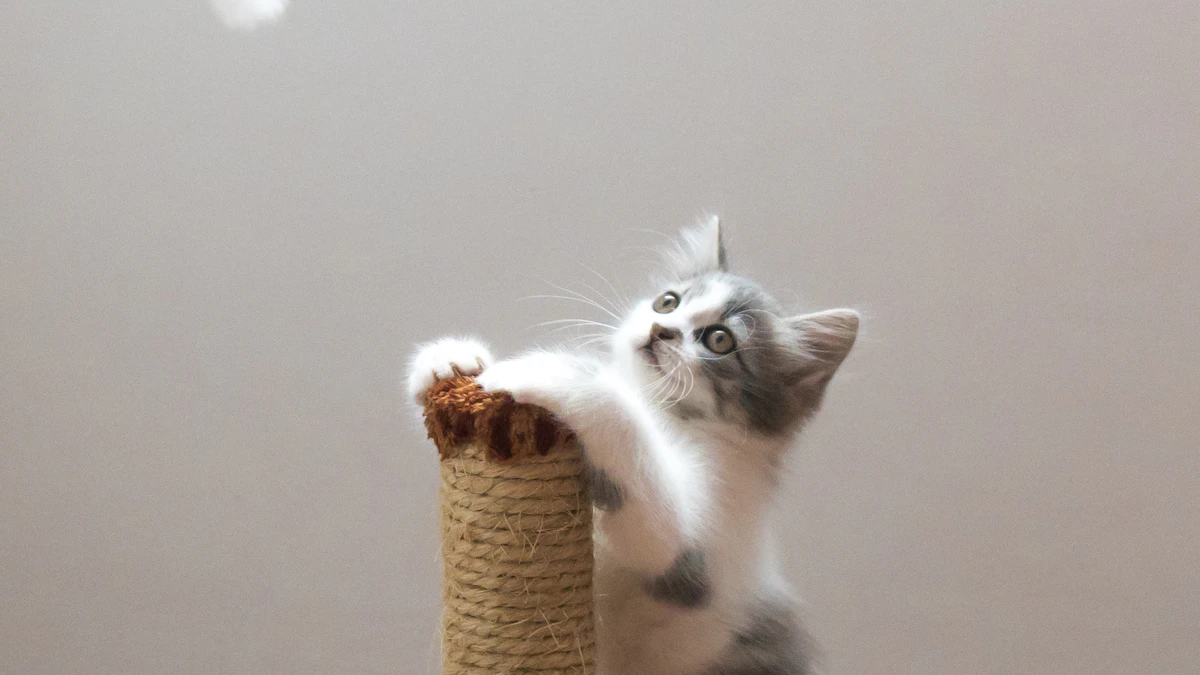
An indoor cat cannot hunt, climb outside, or patrol a territory the way an outdoor cat might. That does not mean indoor life has to be dull, but it does mean activity has to be built in deliberately rather than left to chance.
This guide covers why daily activity matters, practical play ideas, and simple changes to your home that keep an indoor cat moving and interested.
Why Indoor Cats Need Daily Activity
Cats are built to hunt in short bursts, several times a day. Indoors, that natural pattern has nowhere to go unless we create it. Without outlets, energy builds up and often shows up as night activity, furniture scratching, or pestering the household.
Regular activity supports a healthy weight, keeps muscles and joints working, and gives a cat something to do. It also gives owners a daily check-in: while you play, you notice changes in movement, breathing, or interest.
Two short play sessions are usually more realistic than one long one. A ten-minute session in the morning and another in the evening matches the times when many cats are naturally most active.
Interactive Play Ideas for Indoor Cats
The best toys move like prey: unpredictable, quick, and briefly hidden. Wand toys, feather teasers, and a simple string dragged behind a cushion often beat a basket of stationary toys.
- Wand toys: move and pause to mimic hiding prey, and let your cat catch it sometimes.
- Laser pointers: useful for a burst of running, but finish with a toy your cat can actually catch.
- Ball tracks or crinkle balls: good for solo batting when you are busy.
- Hide-and-seek: hide a toy or a treat around a corner and let your cat stalk it.
- Rotate toys: keep a few out and swap them weekly so they stay interesting.
Create a More Enriching Home Environment
Enrichment is mostly about giving a cat choices: places to climb, surfaces to scratch, spots to hide, and puzzles to solve. A room that offers all four keeps a cat occupied without needing you to be there.
Climbing and Resting Spaces
Height matters to cats. A cat tree, wall shelves, or a cleared windowsill gives a view and a sense of safety. Place resting spots where your cat can watch the room without being approached from behind.
Scratching is part of marking and stretching, so provide sturdy posts and pads rather than discouraging the behavior. Sisal posts and flat cardboard pads cover different scratching styles, and placing them near favorite resting spots works well.
Toys, Puzzle Feeders, and Exploration
Puzzle feeders turn part of the day’s food into a small task. Even a simple treat ball or a scatter of kibble on a clean towel gives a cat something to nose around for.
Rotate what is out so the space changes without adding clutter. Circulating boxes, paper bags with handles removed, and a new cardboard tunnel every few weeks can be more interesting than expensive toys.
Build Play into Your Cat’s Daily Routine
- Attach play to a habit you already have, such as after morning coffee or before dinner.
- Warm up with a slow drag of the wand toy, then speed up to trigger a chase.
- Let your cat catch the toy and hold it for a moment to finish the hunt.
- Wind down with a small meal or treat so the burst of activity has a natural end.
- Repeat at roughly the same times so your cat starts expecting both sessions.
A play session just before your own bedtime can help reduce early-morning wake-ups, because it mirrors the natural pattern of hunt, eat, and rest.
Signs Your Cat May Need More Stimulation
Boredom in cats is quiet and easy to miss. These patterns often improve when activity and enrichment increase.
- Restless pacing, especially in the evening or overnights.
- Over-grooming, or a coat that looks chewed or thin in patches.
- New scratching on furniture despite having posts available.
- Following you from room to room and meowing for attention constantly.
- Losing interest in toys that used to work, or sleeping far more than usual.
Frequently Asked Questions
How much play does an indoor cat need?
Two sessions of about ten to fifteen minutes a day suits many cats, though energy levels vary by age and health. Older or unwell cats may need shorter, gentler play.
My cat ignores toys. What else can I try?
Try different types of movement, different times of day, and food-based enrichment such as puzzle feeders. Some cats prefer watching from a high perch before they engage.
Is a second cat a good solution for a bored cat?
Sometimes, but not always. A new cat is not guaranteed company, and introductions take time. Enrichment and structured play are the safer first steps.
Making Indoor Life More Engaging
Building activity into an indoor cat’s day is a matter of habit and environment rather than expensive gear. A little height, a few scratchable surfaces, one toy that moves, and two short play sessions go a long way.
For indoor safety and space planning, see Home & Environment. If evening energy turns into overnight noise, read Why Does My Cat Meow at Night?, and give scratching a proper outlet with Scratching & Kneading.